
The Industrial Revolution Never Ended
Every new technology removes a constraint. Then it creates a problem we did not have before.
Written Feb 2022 · Updated Sept 2026
Why does every new technology feel out of control?#
In 2026, it is difficult to talk about technology without eventually talking about fear.
People are worried that AI will remove jobs. That we will no longer know what is real. That a machine will make an important decision about you and nobody will be able to explain why. That a few companies will own the models, chips and data centres underneath everything else. And, at the furthest end, that we may build systems we cannot control.
These are not all the same fear. Some describe things happening now. Some are possibilities. Some may never happen.
But there is one question underneath them: have our machines moved ahead of our ability to control what happens next?
I first wrote this note in February 2022. I was trying to understand why we divided industrial history into four revolutions. The boxes felt too neat. Steam, electricity, computers and connected machines did not arrive as four clean releases.
Looking at the history again in 2026, I think the boxes were not the most interesting problem.
The more interesting pattern is this:
- A technology removes an old constraint.
- The new capability allows more speed or scale.
- That scale creates a problem the old system cannot control.
- People build another control layer using technology, standards, organisations or law.
- The larger system creates the next problem.
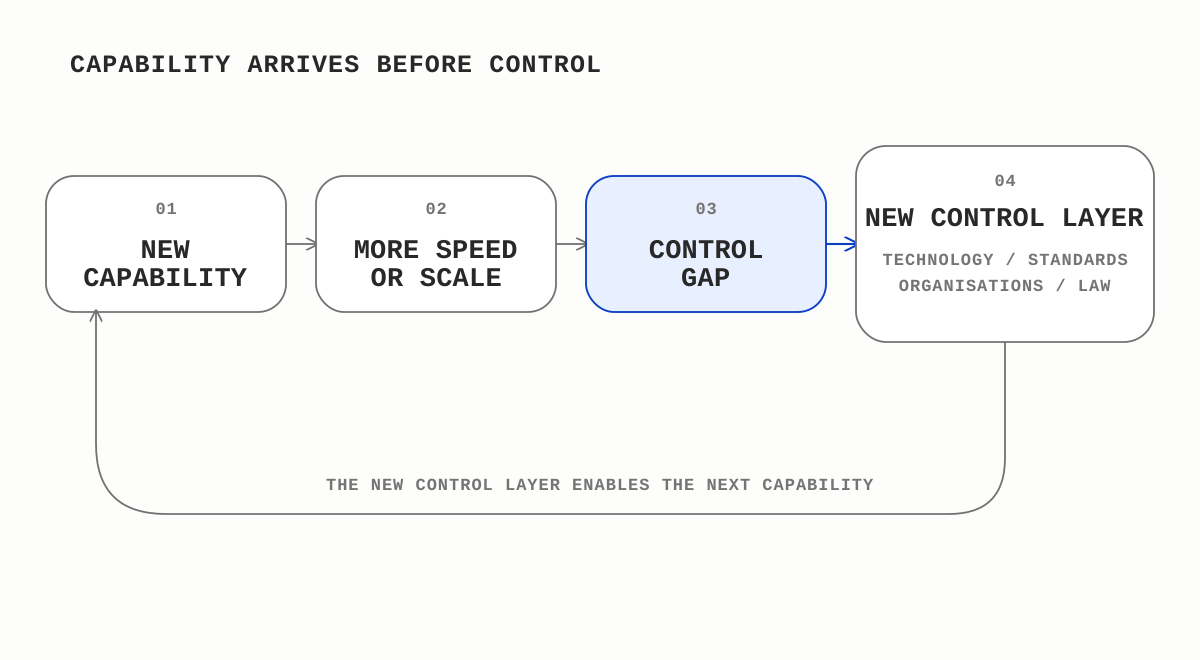
The machine normally arrives first. The systems needed to control its effects have to catch up.
That does not mean technology always solves the problems created by technology. It does not. Factory injuries needed more than a better machine. Exploitation needed more than higher productivity. The response can be technical, but it can also require new rules, institutions and political power.
And people live inside the gap while we work that out.
That is why this history matters now. Not because it tells us that AI will be fine. It tells us what happens when capability arrives before control.
The Industrial Revolution was named after it happened#
If you were living in Britain in 1780, you would not have known that you were living through the Industrial Revolution.
You would have seen machines appearing, mills getting bigger and people moving into towns to work fixed hours. But nobody announced that one historical period had ended and another had started.
The name became important later.
The phrase Industrial Revolution was already circulating before Arnold Toynbee used it. Friedrich Engels used it in 1845. But Toynbee's lectures, published in 1884, helped turn Britain's transition to a machine-based economy into one familiar historical period.
By then, factories had spread. Railways crossed Britain. The telegraph could move information faster than a person or train. Toynbee was looking backwards and trying to explain what the previous century had done.
The name was useful. It also made the change look much neater than it was.
Once you call something a revolution, you start looking for the invention that began it. The steam engine is normally given that job. But the first successful water-powered cotton-spinning factory was not powered by steam. Steam engines had existed before James Watt improved them. Water, steam, human labour and animal power continued beside one another for a long time.
So where exactly does one revolution end and the next one begin?
The question becomes stranger when we reach the fourth Industrial Revolution. Industrie 4.0 was introduced at the Hanover Fair in 2011 as a vision for connected and computer-controlled manufacturing. This time, the revolution was given a number before anyone could know its historical result.
The first Industrial Revolution was a history. The fourth started as a plan.
Before we decide what is happening now, we should look at what actually happened before.
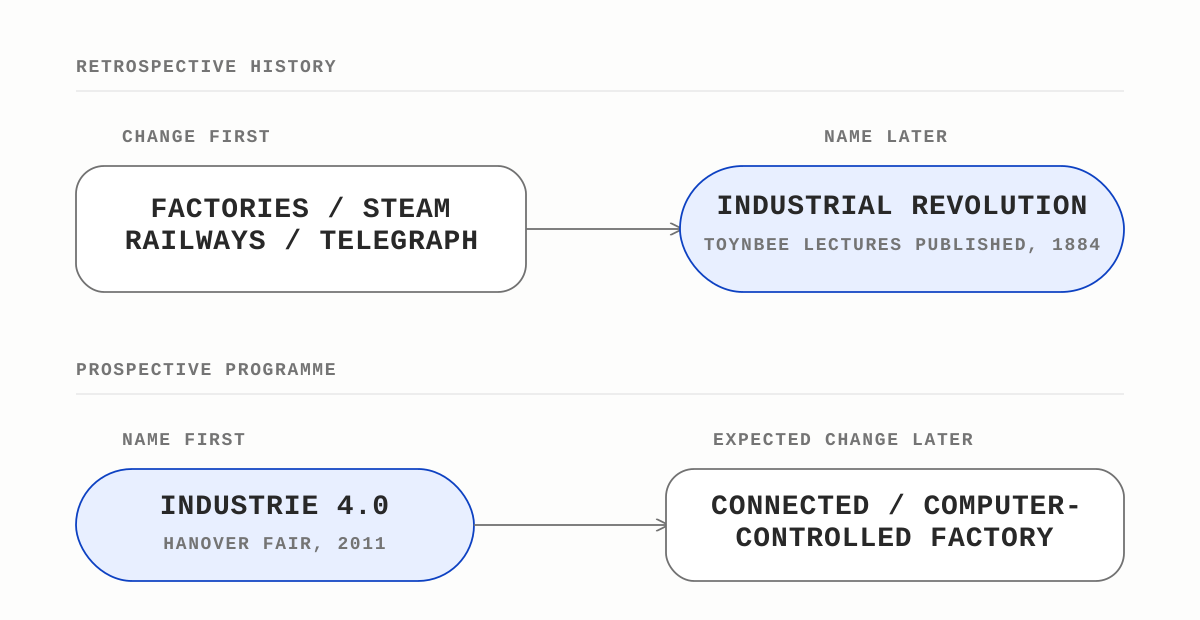
The early Industrial Revolution acquired its familiar name after much of the change. Industry 4.0 was named as a future programme.
Before coal, the economy had an energy ceiling#
To understand what coal changed, you have to begin with wood.
Before industrialisation, most of the energy people could use came from the land around them. Wood supplied heat. Animals and people supplied movement. Both were fed by plants. Wind and water helped, but they were tied to place and weather.
In other words, the economy was living mostly on the energy that the sun and the land produced that year.
This created a problem. The same land had to provide food, fuel, building materials and feed for animals. If you wanted more charcoal for furnaces, that meant using more woodland. If you wanted more horses to move goods, those horses also needed land and food.
There was no single wall where growth suddenly stopped. But there was a real constraint underneath the whole system.
The economic historian E. A. Wrigley describes the change as a move from an organic economy to an energy-rich one. Coal gave Britain access to energy that had been stored over geological time. It did not need to be grown again every year. That was a very different energy store.
This is a better place to begin than the steam engine.
Steam was one way of turning coal into useful movement. But the deeper change was that an economy could now draw on an energy reserve far larger than its annual harvest.
Coal did not cause industrialisation by itself. Britain also had capital, scientific knowledge, high wages, trade, empire, institutions and demand. Historians Gregory Clark and David Jacks have even argued that coal production expanded mainly because industrial demand expanded, and that owning the coal was less important to British income than some accounts suggest. The debate is not closed.
But coal still removed an old constraint.
That is the pattern I want to follow. Not: which famous machine started a new revolution? But: what was the system unable to do before, and what became possible afterwards?
The first modern factory ran on water#
Richard Arkwright's mill at Cromford began operating in 1771.
It is often described as the first successful water-powered cotton-spinning factory. The important word there is not only water. It is factory.

The factory system came before steam became its dominant power source. Water at Cromford Mills, photographed by Peter Barr, licensed CC BY-SA 2.0.
Textile production had previously been spread across homes and small workshops. Different people completed different parts of the work. The pace was not completely free, of course, but the work was still dispersed.
Cromford brought the machines, workers and power source into one place. The building could organise the sequence of production. The owner could supervise the process. Work could begin and end at a common time.
The factory was therefore not just a large room containing machines. It was a way of organising people, energy and time.
And it could be harsh.
Cromford's own history records that children as young as seven were recruited for days that could last 13 hours, six days a week. The new system increased production, but it also increased the owner's ability to control the working day.
That matters because it tells us the industrial story did not begin with a machine replacing a person.
It began with a system concentrating work.
Water powered the machinery, but water also limited it. The mill needed a reliable flow. You could not put the building wherever you wanted. You had to put it where the power was.
The factory had escaped the limits of a single person's muscle. It had not yet escaped the river.
Steam allowed the factory to leave the river#
Steam engines existed before James Watt.
Thomas Newcomen's engines had been pumping water out of mines since the early eighteenth century. Watt's important improvement was the separate condenser, which reduced the amount of heat wasted by repeatedly cooling and reheating the cylinder. The partnership of Boulton and Watt then developed engines that could provide rotary power, not only pump water. The engine was improved in stages.
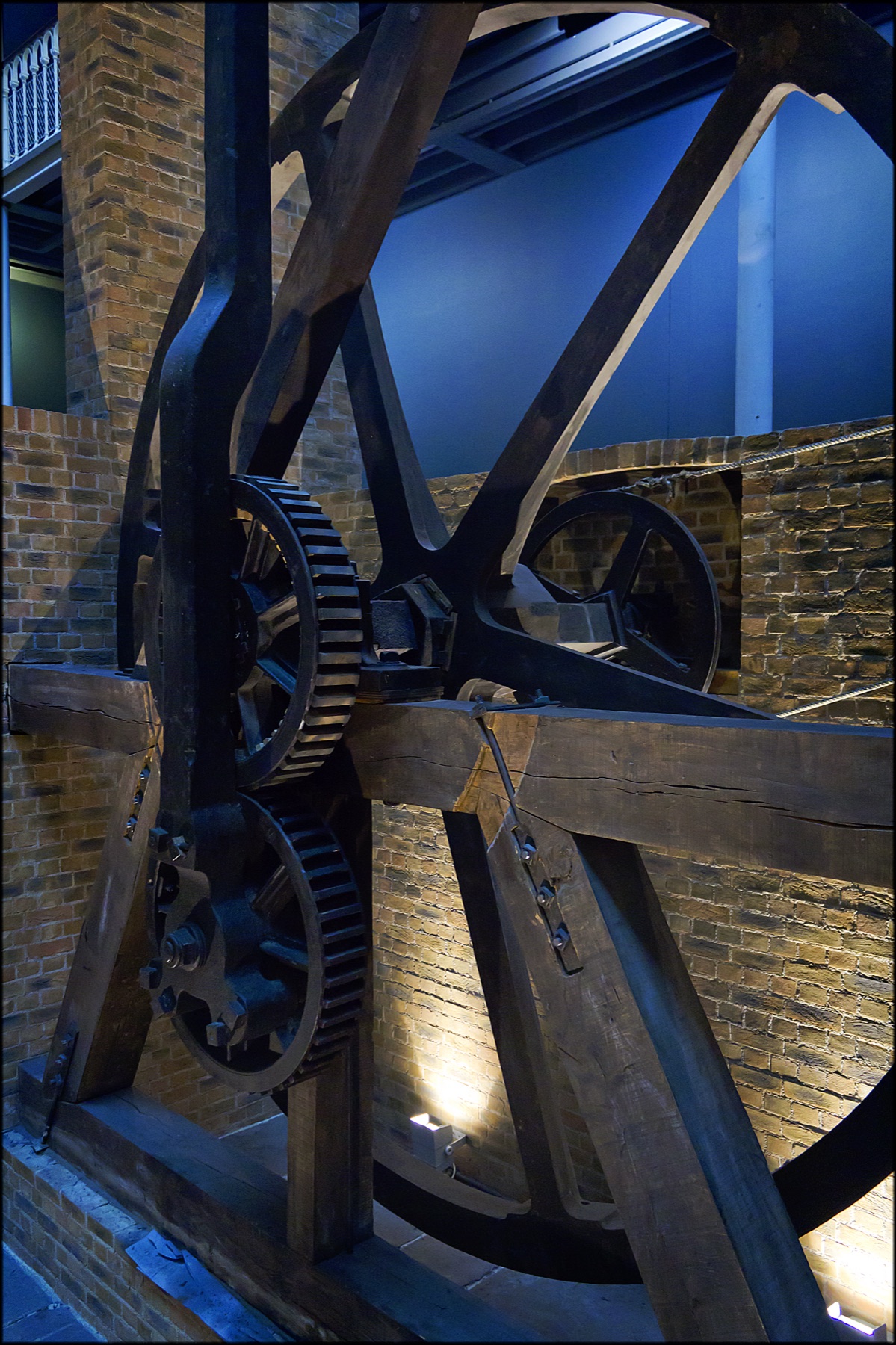
The machinery of a Boulton and Watt engine. Photograph by dun_deagh, licensed CC BY-SA 2.0.
This made the engine more useful to a factory. But the bigger effect was not just more power.
It was location.
A water-powered mill had to negotiate with geography. A steam-powered factory could move closer to workers, coal, ports, suppliers or customers. Power was becoming something the factory could bring with it.
Not anywhere, and not without cost. Coal still had to be moved. Water remained cheaper in many places. Old equipment did not disappear because a better engine existed.
Water and steam operated together for decades. Different industries adopted steam at different speeds. Even the rise in productivity now associated with the Industrial Revolution looks much more gradual when economists reconstruct it year by year. Nicholas Crafts describes an acceleration over time rather than one sudden national take-off. The change was real, but it was not a switch.
This is one reason invention lists are misleading.
Watt did not invent a finished industrial world. A sequence of engineers made steam more efficient and more useful. Mine owners, mill owners, builders, workers and financiers then reorganised production around it. Slowly and unevenly.
The engine removed a geographical constraint. That created more factories, more output and more things that now had to be moved.
Which created the next problem.
The machine was part of a global system#
The story is normally told from inside the British factory.
We see the spinning frame. We see the steam engine. We see the owner who paid for them. Then Britain industrialises.
But the machine did not produce its own cotton.
British cotton mills needed an enormous and dependable supply of raw material. Much of that cotton eventually came from plantations in the Americas where enslaved people grew and picked it. Ships moved it across the Atlantic. Banks, insurers and merchants financed the trade. Imperial power helped secure markets for the finished cloth.
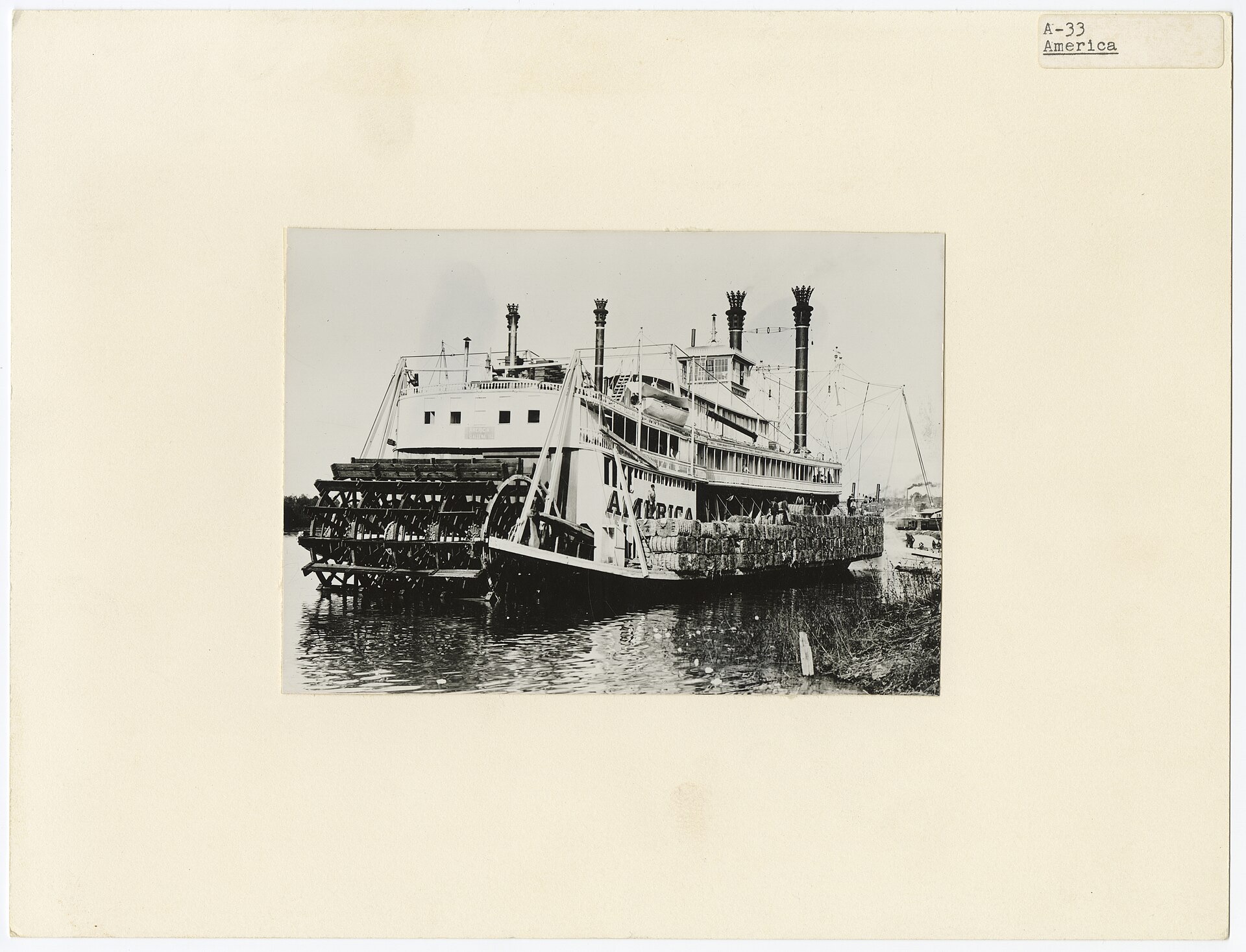
Cotton did not arrive at the mill by itself. Bales on the steamer America, from the Missouri Historical Society and DPLA, public domain.
So when a machine in Manchester became more productive, that increase did not stay in Manchester. It increased the demand placed on plantations, ports, ships, warehouses and workers elsewhere.
The system was already global.
Joseph Inikori argues that slavery was central to the rapid transformation of English cotton textiles. By 1850, his figures show that nearly nine in ten people working in the industry were inside the factory system, with about 21 million spindles and 250,000 power looms. That industrial scale depended on a much wider commercial world.
There is a serious historical debate about exactly how much slavery and empire contributed to British growth. I do not think we need to pretend one number has settled it.
The simpler point is already important.
Industrial technology did not sit outside the political and commercial system. It worked through it. The cheap input, the market, the shipping route, the finance and the machine belonged to the same process.
There was also an older textile economy outside Britain. India had long been a major producer and exporter of cotton cloth. Mechanised British production later competed with, and helped damage, that established manufacturing system. Robert Allen's account of the Industrial Revolution therefore places Britain inside a global economy rather than treating it as an isolated workshop. The factory was local. Its causes and consequences were not.
This is another reason the four-revolution story feels too clean. It normally numbers the machines. It does not number the systems of labour, trade and power that made those machines valuable.
Speed created a control crisis#
More power created more production.
More production created more movement.
Railways and steamships could carry people and materials farther and faster than before. But speed created a strange problem. A system could now move faster than the information required to control it.
Imagine running a railway with only local knowledge.
Where is the train? Has it left the previous station? Is another train coming in the opposite direction? Has the cargo arrived? Is the track clear? Which clock is the timetable using?
A person standing beside one part of the track could not see the whole network. And an owner could not personally supervise a company spread across hundreds of miles.
The sociologist James Beniger called this the control crisis. His argument is that the information society did not suddenly begin with the computer. It began when industrial production and transport became too fast and too large for the old methods of coordination. The physical system had outrun its information system.
The response was not one invention.
Telegraph lines ran beside railways. Timetables became formal. Companies built reporting systems. Managers, clerks and accountants became specialist roles. Information moved up an organisation and instructions moved back down.
Here, control does not only mean domination. It means knowing what a system is doing, comparing it with what should be happening and correcting it when it goes wrong.
Although, of course, the same system also gave managers more control over workers.
Alfred Chandler argued that the railways helped create modern professional management because their size made the older owner-managed company impossible. The organisation itself became a technology.
This is the part of industrial history that invention timelines often miss.
The railway did not only need steel and steam. It needed information. And once companies learned how to coordinate one large network, they could build still larger ones.
Industry had to rebuild time#
Before the railway, different towns could keep slightly different local times. Noon was when the sun reached its highest point where you were.
That was manageable when most journeys were slow and local.
It was not manageable when a train left one town and was supposed to arrive in another according to a printed timetable.
The Great Western Railway adopted London time across its network in 1840. Britain's private railway companies were operating on Greenwich time by 1848. But the state did not legally establish a national standard until 1880. Telegraph signals helped distribute the time from the Royal Observatory. The commercial system standardised time before the law fully caught up.
Think about what had happened.
A faster machine did not only change transport. It forced towns, observatories, companies and eventually Parliament to agree what time it was.
Inside the factory, time was also changing.
Agricultural and craft work had often been organised around tasks. You worked until the job was done, with the pace affected by daylight, weather and the task itself. Factory work placed many people and machines inside one schedule. The bell or clock said when work began, when it paused and when it ended.
E. P. Thompson described this as the rise of time-discipline. The worker was no longer only selling an output. Increasingly, the worker was selling measured hours. Clock time became part of industrial management.
It is easy to treat standard time as background infrastructure because we now live inside it. But it had to be built.
The industrial system was not only changing machines. It was changing the day.
Electricity changed the shape of the factory#
The shallow version of electrification is simple.
Take out the steam engine. Put in an electric motor. Continue as before.
And initially, that is often what factories did.
One large motor powered the same central shafts and belts that the steam engine had powered. The energy source changed, but the factory layout remained much the same.
So the early productivity gains could be disappointing. People had put a new technology inside an old system and expected the full benefit to appear.
The larger change came when factories gave individual machines their own small motors. This was called unit drive.
Now machines did not have to be arranged around a central shaft. Buildings could spread across one floor instead of stacking machines above one another. Materials could move through production in a more direct order. One machine could stop without stopping every belt connected to the same power source.
The motor became more useful when the factory was redesigned around what the motor allowed.
Paul David and Gavin Wright connect this reorganisation to the large rise in American manufacturing productivity after the First World War. Their point is not that electricity waited politely for a fixed number of years before it worked. It is that cheap power, utility networks, new buildings, new machinery and new management had to come together. The complementary system mattered as much as the motor.
Later research has found that factories which did electrify could gain quickly and keep those gains. There was no universal thirty-year delay.
Both things can be true.
A technology can have an immediate effect where it is adopted well, while the economy-wide effect still takes time because most buildings, machines and organisations were designed for the previous system.
This is a recurring mistake in how we talk about technology. We look at the new object and ask what it can replace.
The more important question is often: what can we now reorganise?
The computer began as an industrial paperwork problem#
There is a direct line from a textile loom to how we began processing data.
Joseph-Marie Jacquard used punched cards to control the pattern woven by a loom. The holes represented instructions. Charles Babbage later planned to use cards to instruct his Analytical Engine.
Then the card moved from controlling thread to recording people.
After the 1880 United States census, officials were collecting more information than clerks could tabulate quickly. The work took almost the whole decade. So the Census Office held a competition in 1888 to find a better way.
Herman Hollerith won it.
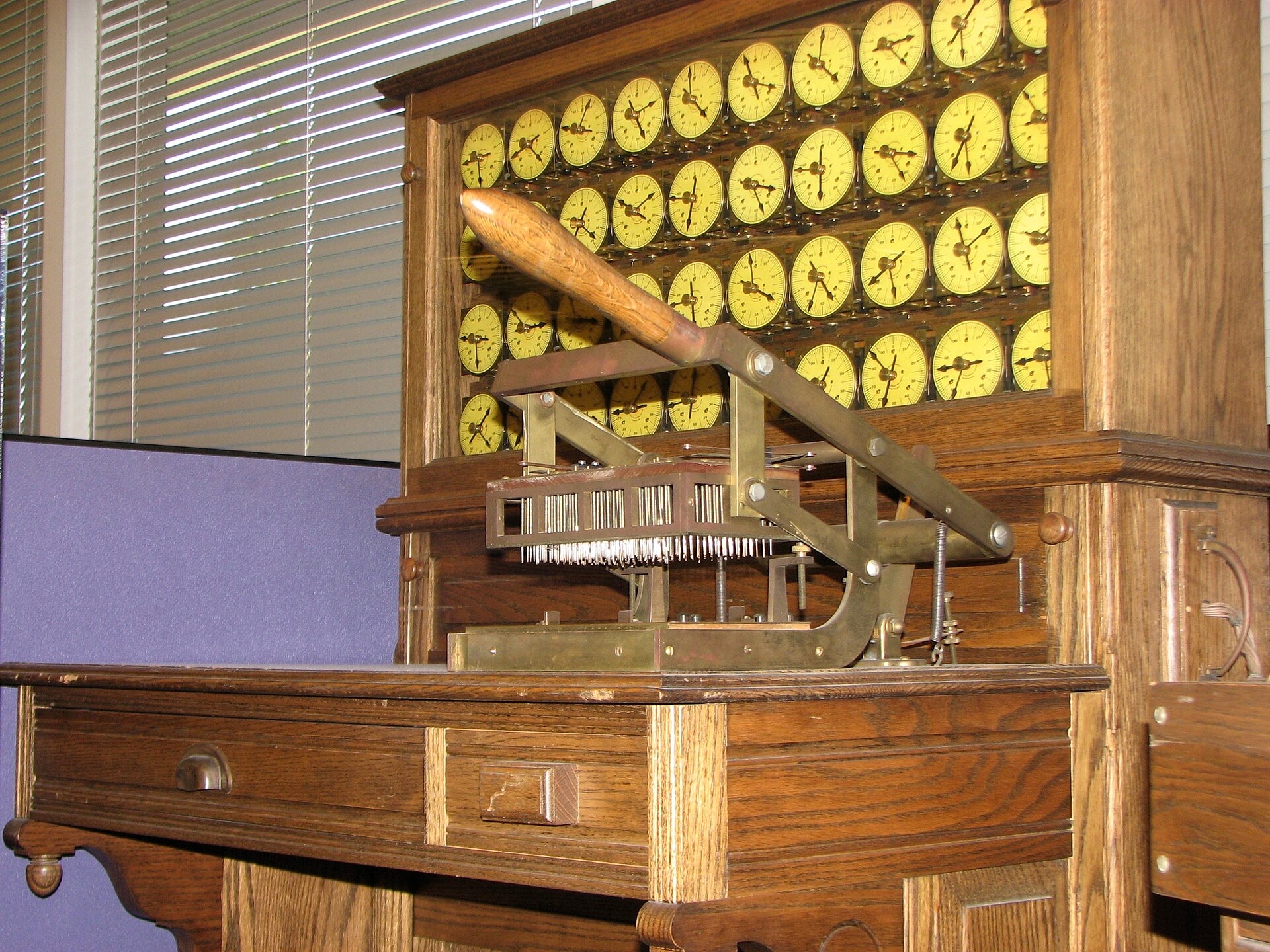
The holes in a card allowed pins to complete electrical circuits and move the corresponding counting dials. A Hollerith tabulator photographed by Erik Pitti, licensed CC BY 2.0.
Each person's information was transferred to a card. Holes represented things such as age, sex or marital status. A reader pushed pins through the holes into mercury, completing electrical circuits and moving counting dials.
It sounds mechanical because it was. But it was also data processing.
Hollerith's system was used for the 1890 census. Modified versions remained in use at the Census Bureau until electronic computers replaced them in the 1950s. His Tabulating Machine Company later became part of the company we know as IBM. The machine moved from a census problem into a business industry.
So the computer did not arrive as an unrelated third revolution.
One of its roots was paperwork.
Large industrial organisations could move more goods, employ more people and collect more records than clerks could reliably process by hand. The physical system had created an information problem. Hollerith mechanised part of the answer.
The punched card did not replace paper immediately either. It became another layer between the paper form, the clerk and the organisation.
Again, the new system sat on the old one before it changed it.
Information became electronic, then programmable#
Punched cards mechanised information, but the cards were still physical.
They had to be punched, carried, sorted, stored and fed into machines. The information could move faster than a clerk with a pencil, but it still moved as paper.
Electronic computers changed that speed.
The first machines were enormous. They used vacuum tubes, consumed a lot of power and belonged mostly to governments, universities and very large companies. In 1951, the United States Census Bureau received UNIVAC I, the first modern digital computer supplied for civilian use. The census problem was still helping to pull computing forward.
Then the machinery began to shrink.
Bell Labs demonstrated the transistor in 1947. The integrated circuit put several electronic components on one piece of semiconductor material. In 1971, Intel released the 4004 microprocessor, putting a programmable central processor on one chip.
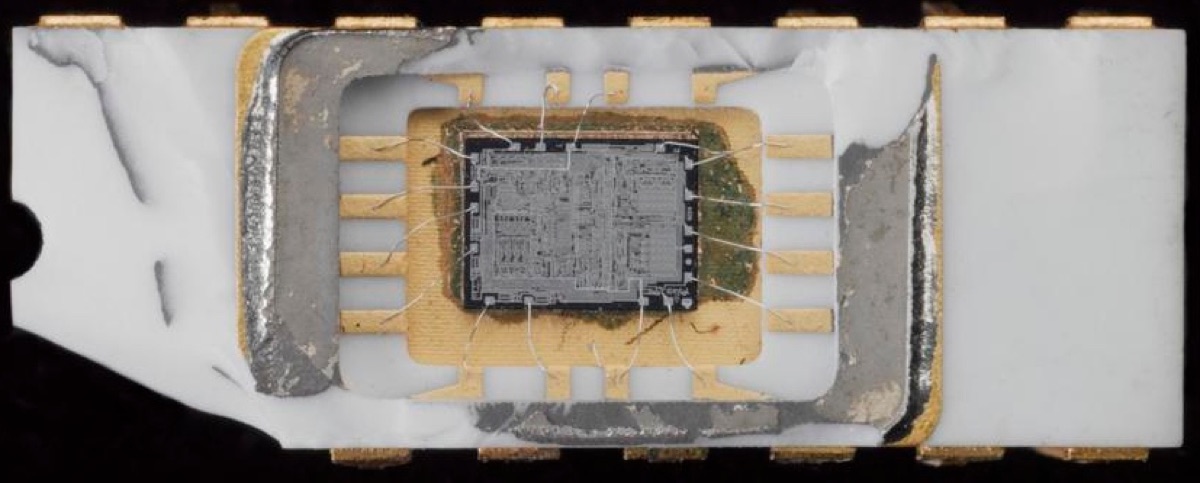
An Intel 4004 made in 1971, opened to show the chip and its connections. Photograph by the Science Museum Group, licensed CC BY 4.0.
The sequence matters more than choosing one invention as the beginning.
The transistor made switching smaller and more reliable. The integrated circuit placed many components together. The microprocessor made a programmable processor into a component that could be manufactured and put inside other products.
And software changed what a machine could be.
An older industrial machine was normally built for one physical operation. To change the operation, you changed the mechanism. A programmable machine could change part of its behaviour when you changed the instructions.
That is a real break in the history.
But it still belongs to the same problem: how do you count, measure, instruct and correct a larger system at greater speed?
The machine was no longer only producing things. It was starting to process the information used to control production.
Computers became a network#
A computer could process information very quickly and still be an island.
To move information between computers, researchers had to solve a different problem. How can machines built in different places, for different purposes, communicate without reserving one permanent circuit between them?
Packet switching was part of the answer. Information was broken into smaller packets, sent across a network and reassembled at the destination.
This research happened in parallel. Work at MIT, RAND and Britain's National Physical Laboratory developed separately during the 1960s. The first ARPANET node was installed at UCLA in September 1969. By the end of that year, four host computers were connected. The history was already less singular than the usual invention story.
The important achievement was not just connecting four expensive computers. It was developing shared rules that allowed different machines and, later, different networks to communicate.
The internet made a network of networks possible.
The Web then made that network easier to use as a common information space. Tim Berners-Lee submitted his proposal at CERN in 1989. By the end of 1990, he had built the first browser, web server and website around HTML, HTTP and URLs. The first Web ran on one computer at CERN.
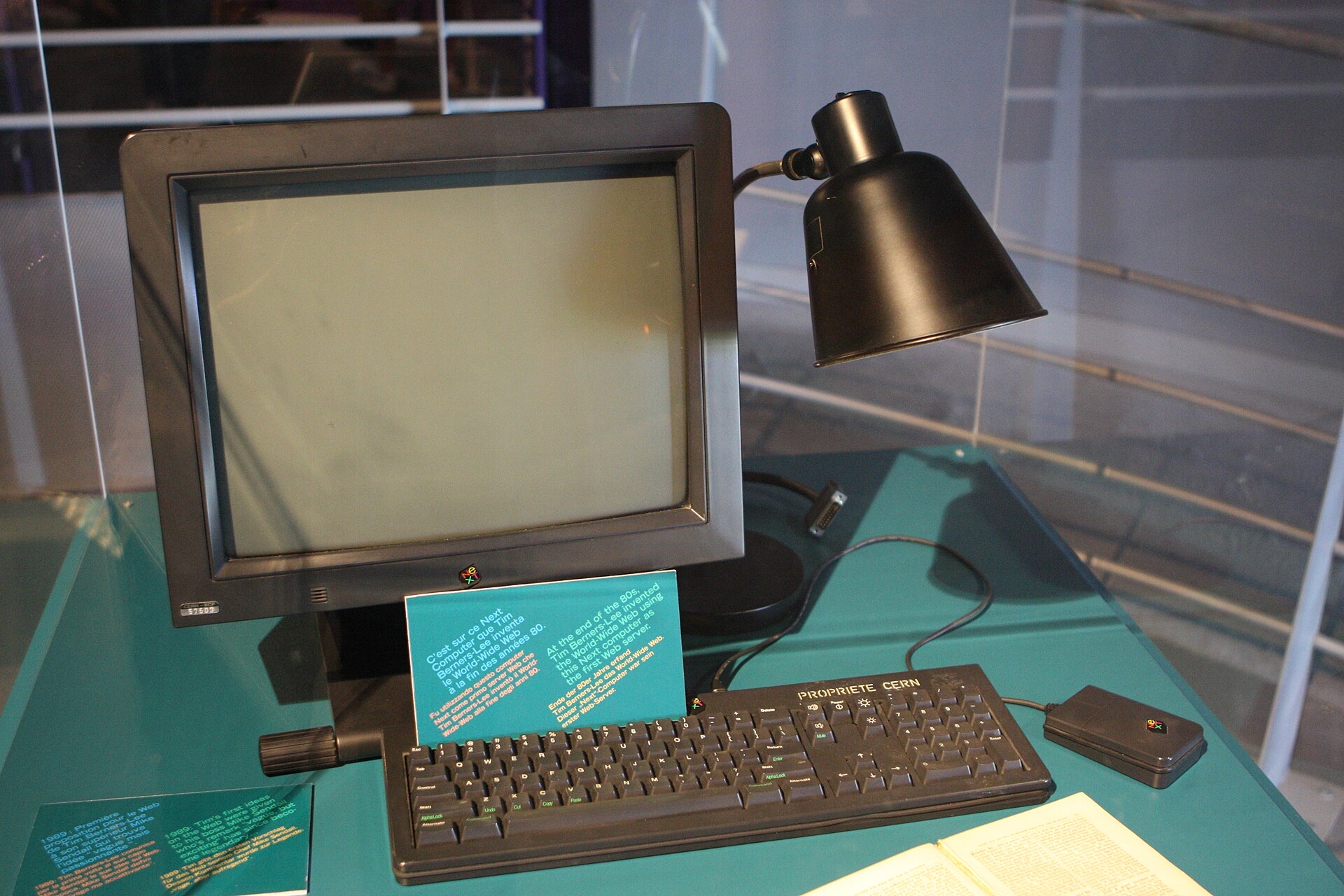
The NeXT computer used by Tim Berners-Lee as the first web server at CERN. Photograph by Henry Muehlpfordt, licensed CC BY-SA 3.0.
These sound like technical details. But each removed a constraint.
The telegraph had allowed information to move faster than a train. Packet networks allowed digital information to find a route between machines. The Web gave a document an address and allowed one document to point to another.
Computing was no longer only about what one machine could calculate.
It was becoming about what connected machines could share.
Computing left the institution#
Early computers belonged to institutions because only institutions could afford, house and operate them.
Semiconductors kept reducing the size and cost. Eventually, programmable computing moved onto the desk.
The IBM PC was not the first personal computer. But its 1981 launch and relatively open architecture helped create a widely copied standard. A company could make the machine, another company could make the operating system and many other companies could make the applications. The layers could now be sold separately.
That created a new industrial structure.
You no longer needed permission from the company that built every physical part of the computer to write every program that ran on it. A software industry could grow on top of a hardware platform.
Then the computer moved from the desk into the pocket.
The smartphone brought together a telephone, camera, map, music player, browser and computer. But the interesting thing was not only that all these objects became one object.
The computer now travelled with the person. It had a permanent network connection, a location, cameras and other sensors. It could observe and respond to ordinary life. Apple's original 2007 iPhone announcement described a phone, an iPod and an internet communicator. The three devices were already becoming one.
At the same time, computing also moved in the opposite direction.
Cloud computing placed storage and processing inside enormous shared data centres. Instead of buying every server, a company could request computing over a network and release it when it was no longer needed. NIST's 2011 definition centred on this on-demand access to a pool of configurable resources. The machine became rentable.
So computing became more personal and more centralised at the same time.
The interface moved into your pocket. Much of the storage and processing moved into somebody else's warehouse.
This made it much easier to build and distribute software. It also concentrated control over the infrastructure underneath that software.
The old industrial question had not disappeared.
Who owns the machine?
From 2011 to 2022, computing moved back into the machine#
By the 2010s, the digital and physical histories were joining more visibly.
Factories had used computers, sensors, numerical control and robots for years. The newer change was that more of these machines could report what they were doing through a network. A digital model could be connected to a physical process. Software could monitor the process and send an instruction back.
Additive manufacturing made the relationship even more direct. A digital model could become a physical object without first being translated into a dedicated mould or cutting pattern.
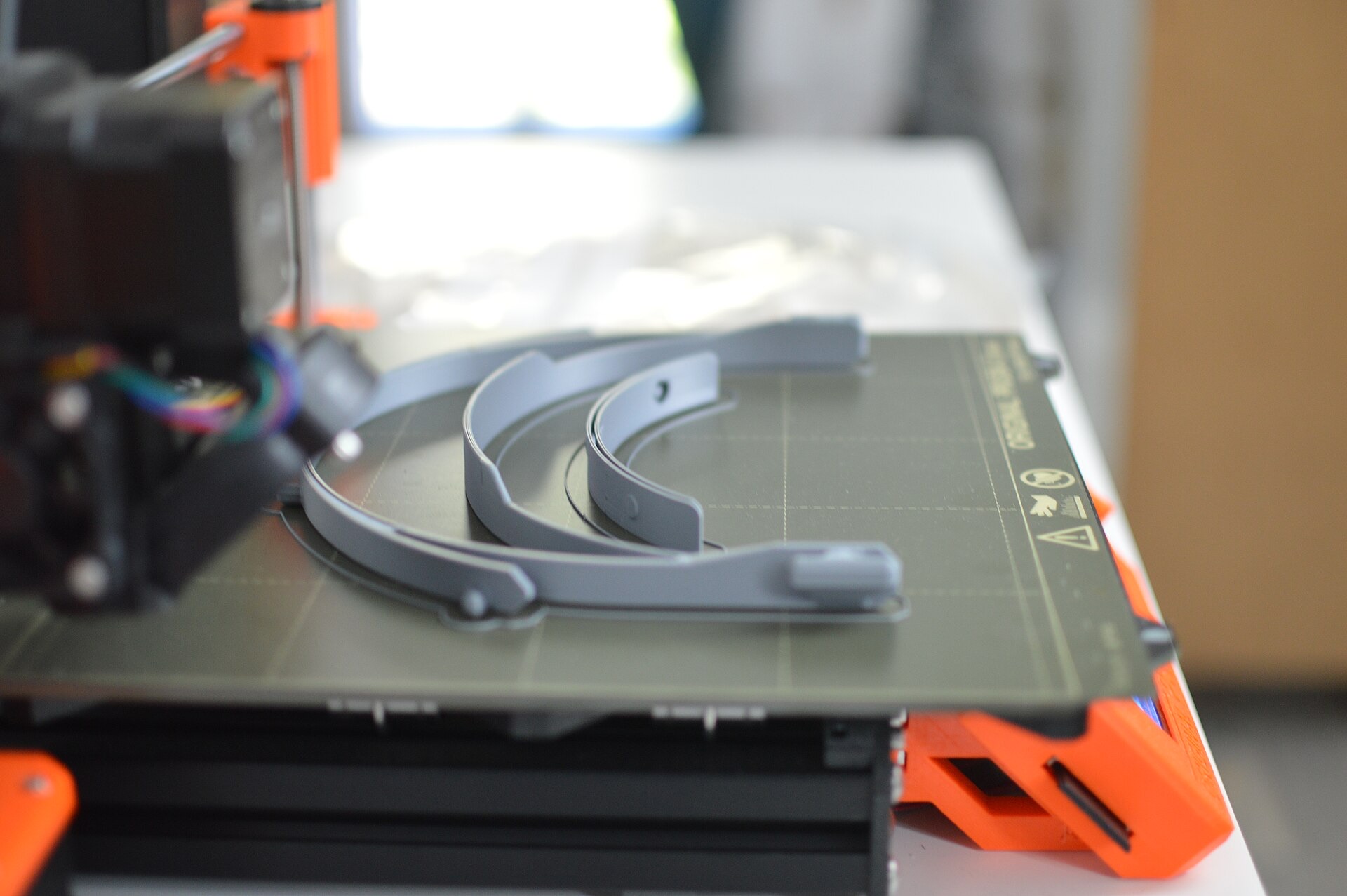
A digital design becoming a physical part at ESA's European Astronaut Centre in 2020. Photograph by ESA, licensed CC BY-SA 3.0 IGO.
Cheap sensors made it easier to measure a machine, vehicle, building or body while it was operating. Cloud systems allowed that information to leave the site. A machine could be monitored from somewhere else. A product could continue producing data after it left the factory.
This was the context in which Germany introduced Industrie 4.0 at the Hanover Fair in 2011. The original idea was about smart manufacturing, cyber-physical systems and connected production. It was an industrial programme.
The name then expanded.
By 2022, people regularly placed robotics, connected devices, 3D printing, biotechnology, data systems and AI inside the same fourth-revolution box.
But these technologies do not have the same history. They do not use the same mechanism. And they will not have the same effect simply because they appeared on the same conference slide.
There is a genuine change underneath the marketing.
Software is not only recording the physical world from outside. It is being built into machines, products and production itself. The loop between measurement, decision and physical action is becoming shorter.
But is that a new revolution?
Or is the industrial system adding another control layer?
By 2022, we can document the convergence. We cannot yet know what historical period people in fifty years will believe it created. A 2021 critique of the fourth Industrial Revolution makes a similar warning: a powerful label can turn forecasts and interests into something that sounds like settled history. The name can get ahead of the evidence.
The four boxes hide what each layer inherited#
There are good reasons to divide history into periods.
Steam, electricity and digital computing were not minor upgrades. Each changed the possible scale and structure of production. Carlota Perez argues that clusters of technologies can create distinct technological revolutions and a new common sense for how the economy should be organised. The breaks are real.
So I am not arguing that every period is false.
I am arguing that the numbering hides the inheritance.
The water-powered factory did not disappear when steam arrived. Electricity did not remove the need for steam, steel, railways or global trade. Computing did not float above the physical world. It depended on electricity, factories, minerals, cables and large organisations.
Each new layer rested on the earlier ones.
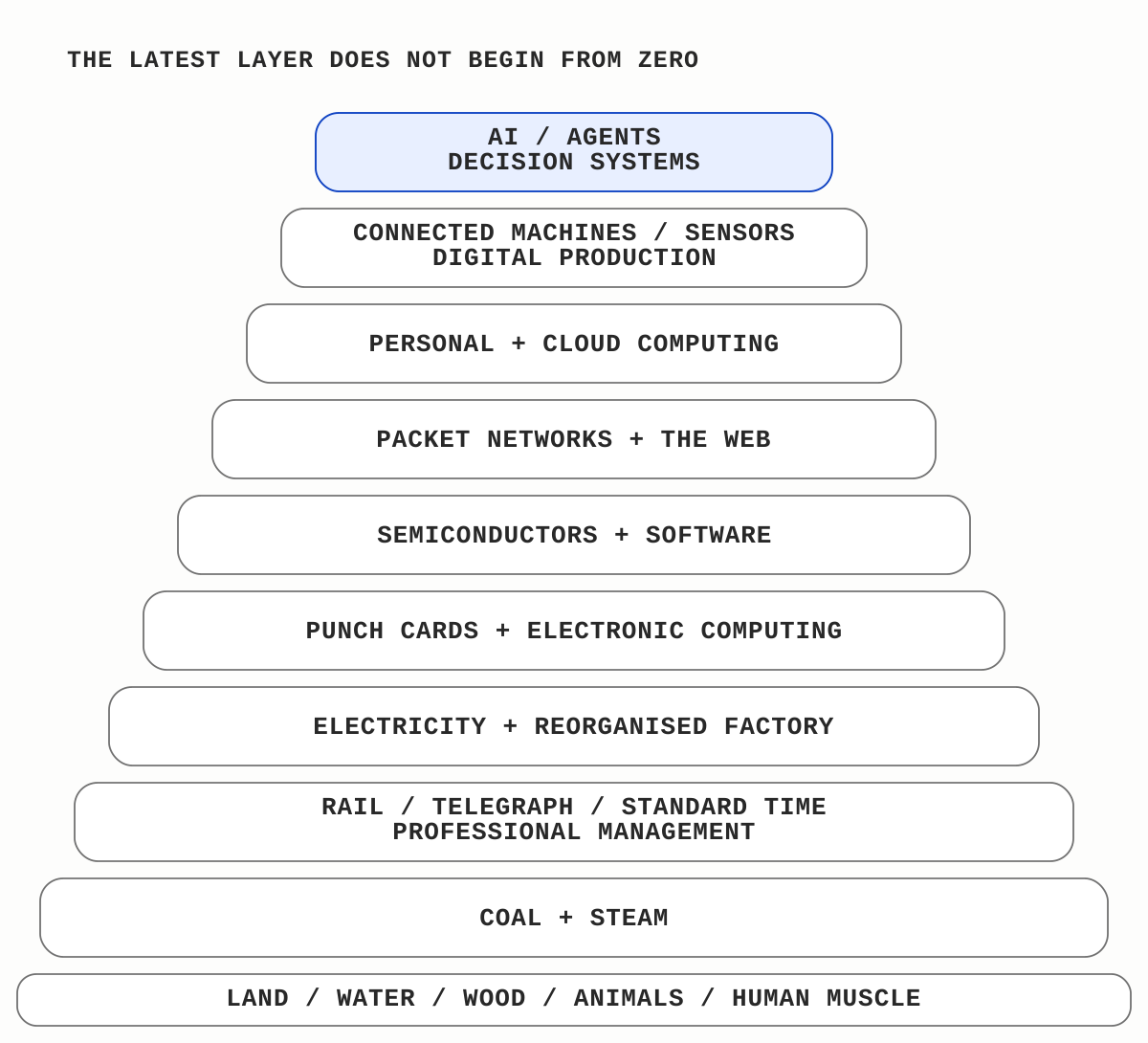
The latest layer starts with an inherited system. It does not begin from zero.
This also explains why newer products can spread so quickly.
Instagram did not need to build the electricity grid, semiconductor industry, internet, smartphone, app store or payment system. It inherited them. Saying that Instagram reached people faster than the telephone does not necessarily make it the more important invention.
It may simply show how much infrastructure was already waiting underneath it.
Adoption speed shows what a technology inherited. Reorganisation shows how deeply it changed society.
And that brings us back to AI.
By 2026, the control layer could act#
When I stopped writing in 2022, software was moving deeper into machines and ordinary life. It could measure a process, record it and send an instruction back.
Since then, AI has made the next part easier to see.
A general-purpose AI system can interpret information, generate a response, write code and recommend a decision. Connect it to tools and give it permission, and it can also take actions. It can search, send a message, change a file or start another process.
This does not mean the machine is conscious. It also does not mean present AI systems can reliably run an organisation by themselves.
But the position of the machine has changed.
The railway used information so a person could control movement. The census machine helped a person count a population. The computer followed instructions so an organisation could process more information.
Now we are beginning to put AI inside the part of the system that interprets the information and recommends what should happen next.
The control layer can act.
That is useful. It is also why the fear feels different.
Work#
People are worried about losing their jobs. That is not an imaginary concern, but the evidence is more complicated than saying AI will replace everybody.
The International Labour Organization estimates that one in four workers is in an occupation with some exposure to generative AI. It also finds that, for now, transformation is more likely than complete replacement because many jobs still need human input. What happens depends on how the technology is introduced at work.
That last part matters. A company can use AI to help a worker do better work. It can also use the same technology to reduce headcount, increase monitoring or move more power towards management.
The machine does not choose how the gain is shared.
Truth and judgment#
People are also worried about what they will be able to trust.
In a 2025 Pew survey, 66% of the American public and 70% of the AI experts surveyed were highly concerned about people receiving inaccurate information from AI. Both groups were also concerned about impersonation, misuse of personal information and bias. The fear is not only that the machine will be wrong. It is that the wrong answer can look convincing.
This creates another control problem. If we use AI to summarise the world, check our work and advise us, how do we notice when it is wrong? And if we stop practising the judgment required to check it, what exactly is the human still controlling?
Energy and ownership#
AI can look like an answer appearing inside a small box on your screen. The machinery underneath it is not small.
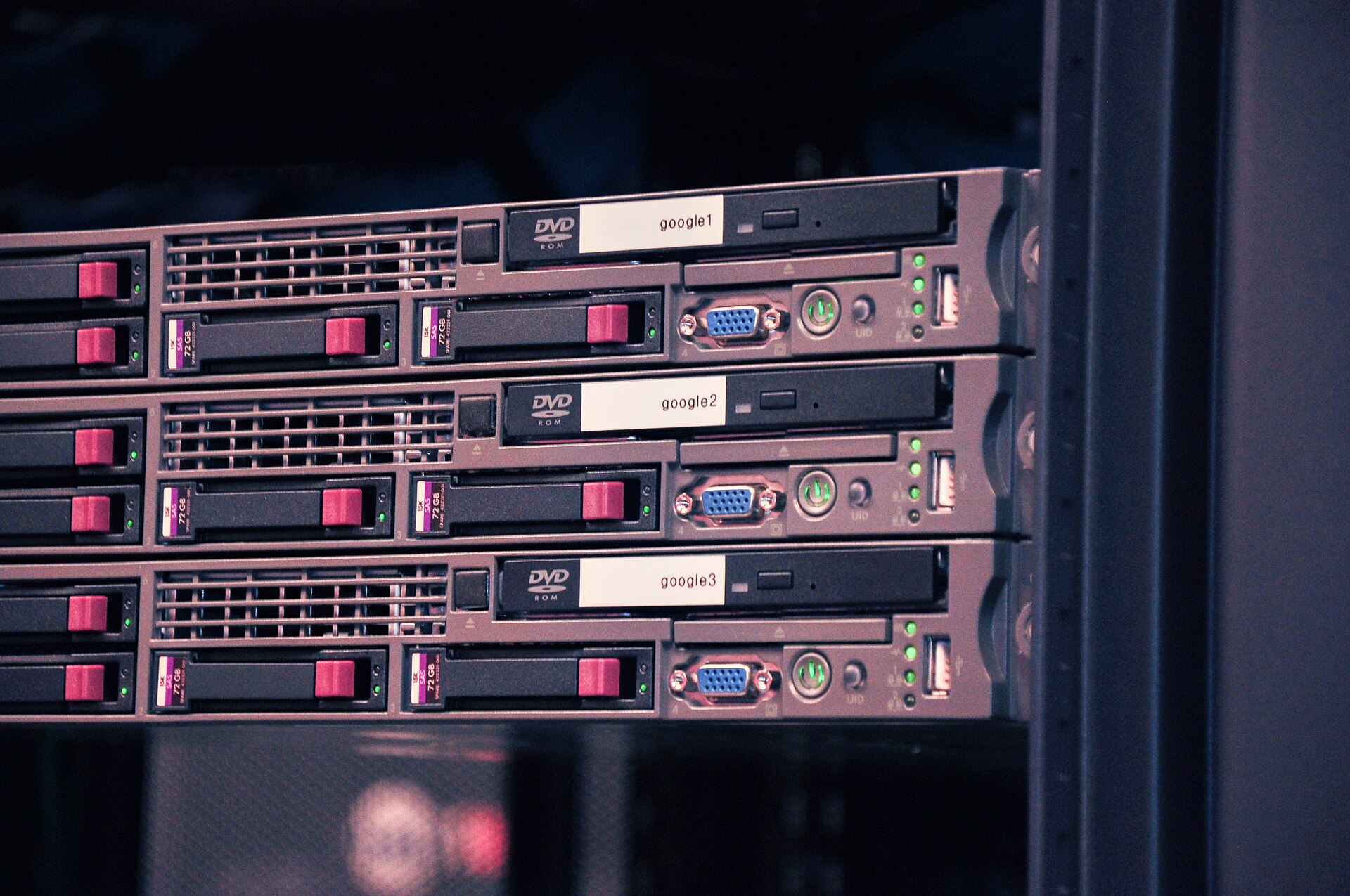
The interface may fit inside your pocket, but the computation still happens inside physical infrastructure. Servers at the Oregon State University Open Source Lab, photographed by Wesley Nitsckie, licensed CC BY-SA 2.0.
The International Energy Agency estimates that data centres used around 1.5% of the world's electricity in 2024. It expects their electricity use to more than double by 2030, with AI as the largest source of that growth. The global share is still small, but the demand is concentrated in particular places.
The ownership is concentrated too. Stanford's 2026 AI Index reports that industry produced more than 90% of notable AI models in 2025, while the most capable models disclosed less about their code, data and construction. The new control layer is being built by a small number of organisations.
Again, this is not a separate story from the Industrial Revolution. The interface feels weightless. Underneath it are power stations, grids, chips, cooling systems, data centres, mines, workers and companies that own access to the machinery.
The machine still does not produce its own inputs.
Loss of control#
Then there is the largest fear: could an AI system operate outside anyone's control?
We should be precise here. The 2026 International AI Safety Report says current systems do not pose an immediate loss-of-control risk. They do not yet have the combined ability to plan reliably over long periods, evade oversight and prevent people from intervening.
But the report also says relevant capabilities are improving, while experts disagree widely about the probability of more extreme outcomes. The risk is uncertain. The potential severity is why people still take it seriously.
So we should not combine a worker losing tasks today with a hypothetical future system escaping human control. They are different problems with different evidence.
But they do share one feature. The capability is developing faster than our agreement about the controls around it.
History does not tell us to relax#
At this point, it is tempting to say that people feared earlier machines, we adapted and everything worked out.
That is too easy.
The factory eventually became safer, but children worked 13-hour days while the system was growing. British textile machinery became more productive, but part of its cotton supply depended on enslaved labour. Standard time made the railway work, but factory time also increased the owner's control over the worker's day.
Society adapted. But the cost of adapting was not shared equally.
And the machine did not fix that by itself.
Some control problems did receive technical answers. Railways used telegraphs and signalling. Organisations used accounting and computers. Networks used shared protocols and cryptography.
Other problems required laws, standards, unions, public institutions and political fights. Normally, we needed both.
That is the useful warning for AI. Not that we should stop every new technology. And not that history guarantees everything will be fine.
The warning is that a transition does not manage itself.
What controls the control layer?#
The European Union has already started requiring providers of general-purpose AI models to document their systems. Providers of the most advanced models also face requirements around risk assessment, incident reporting and cybersecurity. These are early attempts to build a control layer around the control layer.
Technology will be part of the answer too: better evaluations, provenance, permissions, audit logs and systems that can be interrupted. But none of these decides who gets protected, who receives the productivity gains or how much power one company should hold.
Those are decisions.
So instead of asking only whether AI is another Industrial Revolution, I think we should ask:
- What constraint does it actually remove?
- What becomes possible at a scale that was not possible before?
- What new problem appears because of that scale?
- What infrastructure did it inherit?
- What would have to be reorganised around it?
- Who supplies the energy, materials, data and labour underneath it?
- Who owns the new control layer?
- Who pays while the controls catch up?
- Which answers need better technology?
- Which answers need institutions, laws or limits?
We do not yet know what name historians will give this period. We are inside it.
But the Industrial Revolution gives us a better way to look at it. New capability. More scale. A control gap. Then the difficult work of catching up.
History does not come in versions. Maybe the first Industrial Revolution never ended.
Maybe we are standing inside its next control problem.
Research sources
- Arnold Toynbee and the Industrial Revolution, Cambridge repository
- The origins of the idea of the Industrial Revolution, Open University
- Energy and the English Industrial Revolution, E. A. Wrigley
- Coal and the Industrial Revolution, Gregory Clark and David Jacks
- The history of Cromford Mills
- James Watt, Science Museum Group
- Understanding productivity growth in the Industrial Revolution, Nicholas Crafts
- Slavery and the Revolution in Cotton Textile Production in England, Joseph Inikori
- The British Industrial Revolution in Global Perspective, Robert C. Allen
- The Control Revolution, James Beniger
- The Visible Hand, Alfred D. Chandler Jr.
- Railways, the Royal Observatory and Greenwich time, Cambridge University Press
- Time, Work-Discipline, and Industrial Capitalism, E. P. Thompson
- General Purpose Technologies and Surges in Productivity, Paul David and Gavin Wright
- The Rapid Adoption of Electrification in American Manufacturing, NBER
- The Hollerith Machine, United States Census Bureau
- The early evolution of census data processing, United States Census Bureau
- The 1956 Nobel Prize in Physics for the transistor effect
- The 2000 Nobel Prize in Physics and the integrated circuit
- The Intel 4004
- A Brief History of the Internet, Internet Society
- The first browser, website and server at CERN
- The IBM PC
- Apple introduces the iPhone, 2007
- The NIST Definition of Cloud Computing, 2011
- What is Industry 4.0?, German Institute for Standardisation
- The Myth of the Fourth Industrial Revolution
- Technological revolutions and techno-economic paradigms, Carlota Perez
- How the US public and AI experts view artificial intelligence, Pew Research Center
- Generative AI and jobs: a 2025 update, International Labour Organization
- Energy and AI, International Energy Agency
- The 2026 AI Index Report, Stanford Institute for Human-Centered AI
- International AI Safety Report 2026
- General-purpose AI obligations under the EU AI Act, European Commission